
I wasn’t supposed to be a leader.
Nothing in my background suggested I’d spend my career developing leaders or serving as an executive. I had no natural advantages, no family business to step into, no MBA from a prestigious program opening doors. What I had was a homeschool education that ended with a GED, SAT scores that barely qualified me for college admission, and more than a few people who believed I wasn’t “leadership material.”
But here’s what I’ve learned through decades of leadership work: Leaders aren’t born. They’re made, and remade, through keystone moments that teach them to bear weight.
Today, I want to share two keystone moments from my own journey, moments that fundamentally shaped how I lead and serve. But more importantly, I want to give you a framework for identifying and leveraging your own defining experiences. Because, while these are my keystone moments, it is the reflection process that transformed them from difficult experiences into foundational keystones for my leadership. That’s something every leader can, and should, apply to their own journey.
The question isn’t whether you’ve experienced keystone moments. You have. The question is whether you’ve paused long enough to capture the lessons they contain.
Understanding Keystone Moments: The Architecture of Leadership
Think about a Roman colosseum. Those massive stone arches have stood for thousands of years, bearing enormous weight. The secret? The keystone, that wedge-shaped piece at the arch’s apex that locks everything in place.
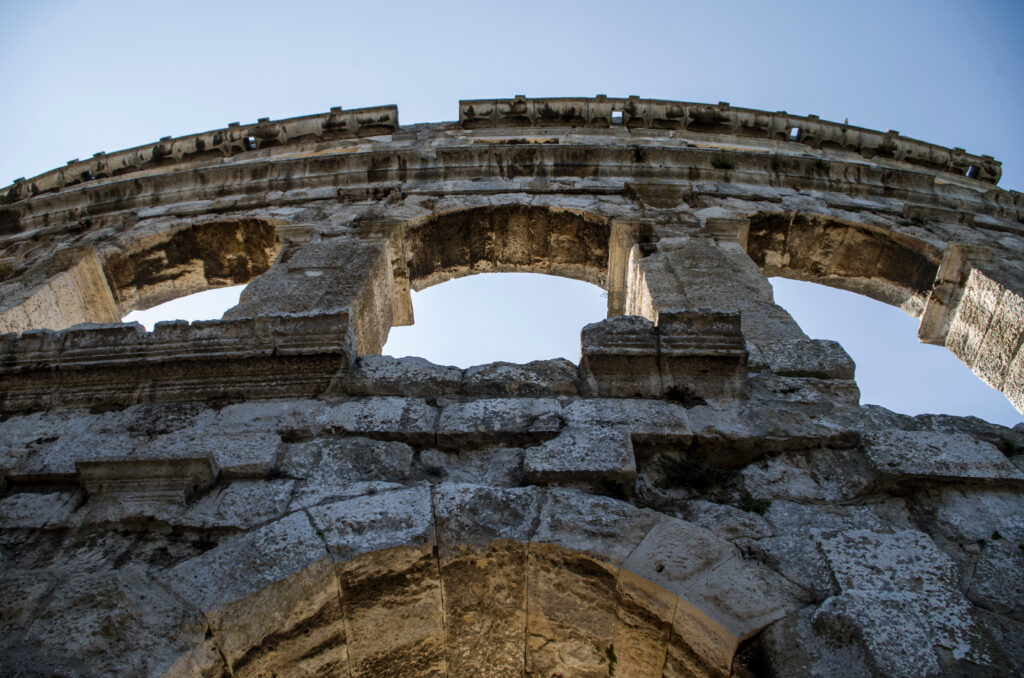
Remove the keystone, and the arch collapses. But with it properly positioned, the structure can bear far more weight than the sum of its individual stones.
Your leadership development works the same way.
Keystone moments are those defining experiences that teach you to bear weight, the weight of responsibility, challenge, doubt, and growth. As research from the Center for Creative Leadership confirms, “leaders learn best from experience, but only when they engage in deliberate reflection to extract meaning from those experiences” (McCall, Lombardo & Morrison, 1988).
Recent research from Stanford’s Graduate School of Business reinforces this insight with a crucial addition: sustainable growth requires seeing both yourself AND your circumstances as changeable. In a landmark study published in the Journal of Applied Psychology, researchers Berg, Wrzesniewski, and Grant found that employees who developed what they call “dual-growth mindset,” believing both their abilities and their job designs are malleable, experienced lasting gains in workplace happiness that persisted six months later. Those who focused on changing only themselves or only their circumstances saw temporary boosts that quickly faded (Berg, Wrzesniewski & Grant, 2022, Journal of Applied Psychology, 107(11), 1928-1949).
Keystone Moments Are Where You Learn, and Grow
This validates what I’ve observed in decades of leadership development: The most powerful keystone moments teach you that both you and your situation can change. You’re not stuck with who you are today, and you’re not trapped in your current circumstances.
The challenge? Most leaders never pause to identify these moments. They’re too busy moving to the next project, the next crisis, the next promotion. Without reflection, experiences just become history, not building blocks for future strength.
That’s why I developed four questions every leader should ask about their defining moments:
- What happened? (The facts, without judgment)
- What did I learn? (The lesson extracted from experience)
- What can I share and create because of this? (The value generated for others)
- How can I help others because of what I learned? (The service opportunity unlocked)
These questions transform what happened to you into what happened for you. They convert experience into wisdom. They help you recognize that the moment didn’t just change you, it revealed your capacity to change both yourself and your circumstances.
Let me show you how this works by walking you through two moments that became keystones in my own leadership colosseum.
My First Keystone Moment: When Someone Says You Don’t Belong
I’ll never forget sitting across from my college admissions counselor, watching him review my file. GED. Below-average SAT scores. Homeschool background with no traditional transcript.
He looked up with what I’m sure he thought was compassionate advice: “Dusty, not everyone is cut out for college. Not everyone is supposed to pursue higher learning. There’s a wonderful trade school in town. Maybe that would be more suited for your… educational background.”
I sat there, processing. Then I got angry.
Who was this person to define me based on test scores that reflected a non-traditional education path rather than actual capability? Who was he to limit my future based on external metrics that couldn’t possibly capture my hunger to learn, my discipline to grow, or my determination to succeed?
In that moment, I made a choice: I would be defined by my decisions, not his doubts.
Four years later, I walked back into that same office. I slid my diploma across the desk, magna cum laude, looked him in the eyes, and said: “Thank you, for motivating me. Thank you for inspiring me. Thank you for giving me the extra energy I needed.”
The lesson I captured from that keystone moment? External judgments don’t determine internal potential. Ever.
Research on stereotype threat shows that when people are reminded of negative stereotypes about their group, their performance actually suffers (Steele & Aronson, 1995, Journal of Personality and Social Psychology, 69(5), 797-811). But here’s the powerful part: individuals who reframe these judgments as motivation rather than definition can transform that pressure into performance fuel.
That college counselor gave me a gift, though he didn’t intend to. He gave me clarity about who gets to define me: I do. You do. Not the doubters, not the critics, not the people who can’t see past their limited metrics.
This is crucial for leaders. You will face moments when others question your right to be in the room, because you’re too young, too unconventional, from the wrong background, missing the expected credentials. Your choice in that moment shapes everything that follows.
My Second Keystone Moment: Standing Firm When You Earn Your Seat
Fast forward a few years. I’d just been promoted to my first officer-level role. I was 27, working alongside executives who had 20+ years of experience on me. And there was one person, our CMO, who made it very clear they didn’t think I belonged.
For months, I endured subtle (and not-so-subtle) undermining. Questions about my judgment in meetings. Dismissive comments about my “lack of experience.” Strategic attempts to route around me on decisions within my authority.
I tried everything. Collaboration. Seeking first to understand. Demonstrating competence. Building trust through results. Nothing worked.
Finally, I’d had enough. I pulled this person aside and said something I’d never said before in my professional life:
“You may believe I don’t belong in the room. But I don’t care what you think. There is no doubt that I belong here. I will seek first to understand and I will learn from you, but I will not be denigrated or intimidated because you don’t like the fact that I’m 27 and in this role. I have a skillset and track record that speaks for itself. You will not bully me. I’ll work with you, and I will work for you, but I will not work against you, and I will not tolerate you working against me.”
That moment changed everything.
Not only did this person’s behavior shift immediately, but I earned something I hadn’t expected: genuine respect. By standing firm, by claiming the space I’d already earned, I demonstrated the executive presence they needed to see.
The lesson from this keystone moment? Leadership isn’t about making people comfortable. It’s about serving the mission, and sometimes that requires confronting those who would undermine it.
As Harvard Business Review research notes, “leaders who demonstrate both warmth and strength, caring deeply about relationships while standing firm on standards—earn the highest levels of trust and followership” (Cuddy, Kohut & Neffinger, “Connect, Then Lead,” HBR July-August 2013).
I had tried warmth alone for months. What I learned was that strength without aggression, boundary-setting without bullying, was equally essential. The keystone clicked into place, and I could bear more weight because I’d learned this lesson.
Building Your Leadership Colosseum: A Reflection Practice
Now here’s why I shared those stories: These are my keystone moments, but you have your own. And unless you’ve paused to identify and extract their lessons, you’re leaving leadership capability on the table.
The research is clear on this. That Stanford study I mentioned earlier tracked 398 employees across multiple organizations and found something remarkable: participants who were taught to view both themselves and their work situations as changeable showed sustained happiness gains that lasted at least six months. Those who focused on changing only themselves or only their circumstances? Their initial boosts in happiness disappeared within weeks (Berg, Wrzesniewski & Grant, 2022, Journal of Applied Psychology, p. 1940).
The difference? Employees with dual-growth mindset made what researchers call “substantial agentic changes,” meaningful alterations to both their capabilities and their circumstances. They didn’t just adjust their attitude about their job; they actively reshaped both themselves and their roles in complementary ways. Those changes were significant enough to avoid the “hedonic treadmill” that usually causes us to quickly return to our baseline happiness level after positive events.
This is precisely what keystone moments enable. They teach you that you can change who you are AND change your circumstances, and that the most powerful transformations come from changing both simultaneously.
The Roman Colosseum isn’t one arch, it’s dozens of arches stacked on each other, each one bearing the weight of those above it. Your leadership colosseum is built the same way: keystone moment upon keystone moment, lesson upon lesson, each one enabling you to bear more weight and serve at higher levels.
So how do you identify and process your own keystone moments? It all starts with embracing the Power of Reflection.
Start with the Four Reflection Questions:
- What happened? Write the objective story. Remove judgment and emotion. Just the facts.
- What did I learn? This is where meaning-making happens. What did this experience teach you about yourself, about others, about leadership? More importantly, What did it reveal about your capacity to change both yourself and your circumstances?
- What can I share and create because of this? Your lessons have value for others. How can you package this wisdom to serve your team, your organization, your community?
- How can I help others because of what I learned? Leadership is ultimately about service. How does this keystone moment enable you to serve more effectively?
I’ve created a free resource to help you work through this process: the Keystone Moments Reflection Journal. It’s a simple guide that walks you through identifying and processing your own defining moments using this exact framework.
Because here’s what I know after decades of this work: Leadership is learning. Not a learned behavior, a learning behavior. It’s the active, continual engagement in extracting lessons from experience so you can grow and serve better.
You don’t need to be born into leadership. You don’t need the perfect background or credentials. You need the discipline to pause, reflect, and choose growth over comfort.
Your Keystones Are Waiting
I opened by saying I wasn’t supposed to be a leader. That’s true if you look at environmental advantages or natural opportunities. But it misses the most important factor: I chose to be one.
Not through arrogance or ambition. Through learning. Through reflection. Through taking the moments that could have crushed me and letting them shape me instead.
That college counselor who said I wasn’t college material? He gave me the gift of clarity about who defines me.
That CMO who spent months trying to diminish me? They gave me the gift of learning that leadership requires standing firm, not making everyone happy.
These weren’t fun experiences when I lived them. They were frustrating, painful, anger-inducing. But when I paused to reflect, to ask what happened, what I learned, what I could share, and how I could help others, they became keystones in my leadership colosseum.
You have your own keystones. Maybe you faced a moment where someone told you that you weren’t ready, weren’t qualified, or weren’t the right fit. Perhaps you had to make a difficult choice that tested your values. Maybe you experienced failure that taught you more than any success could have.
Those moments are sitting in your history, waiting to be transformed from experiences into wisdom. The question is: Will you pause long enough to identify them and extract their lessons?
Ready to identify your keystone moments? Download the free Keystone Moments Reflection Journal to start processing your defining leadership experiences.
Listen to the full Leadership Unlocked podcast episode: Two Tough Moments Every Leader Needs to Experience – Episode 24
FAQs
Keystone moments typically share three characteristics: (1) they challenged your existing understanding of yourself or leadership, (2) they required a choice that felt consequential at the time, and (3) you can trace a clear “before and after” in how you led following that experience. Start by asking: “What are the 3-5 experiences I reference most often when explaining how I became the leader I am today?” Those are likely your keystones.
Absolutely not. In fact, research consistently shows that adverse experiences, when properly processed through reflection, are among the most powerful catalysts for leadership development. The keystone isn’t the pleasant experience; it’s the one that taught you to bear weight. Pain, challenge, and difficulty often create the most solid keystones because they forced growth you wouldn’t have chosen voluntarily.
I recommend two levels of reflection: (1) Annual deep reflection, where you identify and process 1-2 new keystone moments from the past year using the Four Questions framework; and (2) Weekly reflection, where you review significant experiences and assess whether they might become future keystones. The key is consistency, not frequency. Even a quarterly deep reflection will transform your leadership development.
Keystone moments occur throughout your entire leadership journey. Early-career moments often shape your fundamental leadership identity (like my college counselor experience), while mid-career moments tend to refine your approach to specific challenges (like learning to confront respectfully), and late-career moments often clarify your legacy and service philosophy. Your leadership colosseum continues building until you stop leading.
Regular experiences are the hundreds of decisions, conversations, and challenges you navigate weekly. Keystone moments are the rare inflection points that fundamentally shift your leadership trajectory. The distinction? A keystone moment creates lasting change in how you lead, not just what you do. You’ll reference it years later. You’ll teach from it. It becomes part of your leadership operating system. Most importantly, it enables you to bear weight you couldn’t bear before.